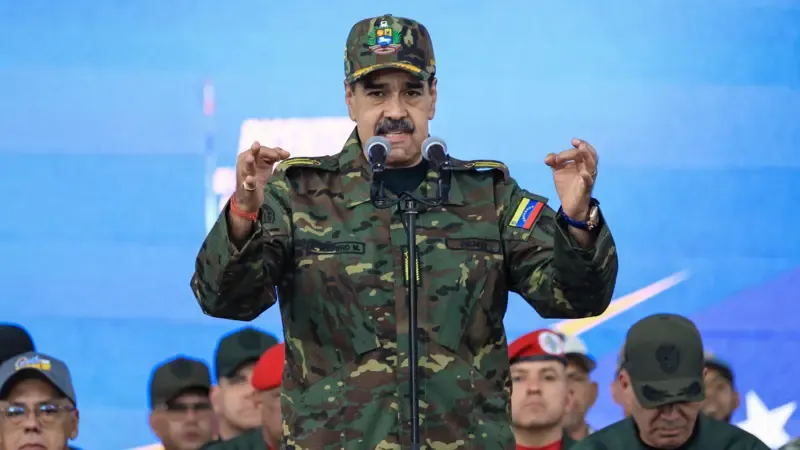
On January 3, the United States launched a military operation against Venezuela. President Donald Trump confirmed that the United States had struck targets in Venezuela, captured President Nicolás Maduro, and expelled him from the country. According to U.S. information, Maduro and his partner are today accused in New York of "narco-terrorism," cocaine smuggling, and weapons possession.
How is the world reacting to these events? Several allies of Venezuela condemned the U.S. attacks on the country, including Russia's Ministry of Foreign Affairs, which today issued a statement condemning the "armed aggression against Venezuela." The document speaks of Moscow's solidarity with the Venezuelan people and its "support for the Bolivarian leadership's course aimed at protecting the country's national interests and sovereignty."
In another statement, Russia's Ministry of Foreign Affairs calls for "immediate clarification" regarding the "forced evacuation" of President Maduro and his partner. The ministry calls this an "unacceptable aggression against the sovereignty of an independent state" and appeals to international law.
Furthermore, it was emphasized that Russia's embassy in Caracas is in constant contact with Venezuelan officials and Russian citizens located in Venezuela. There is currently no information about any Russian citizens being injured.
Cuba and Iran also condemned the U.S. actions. Tehran declared the attack a "gross violation of Venezuela's national sovereignty and territorial integrity" and called on the UN Security Council to intervene.
Neighboring Colombia's President Gustavo Petro declared on social media that "the Colombian government rejects the aggression against the sovereignty of Venezuela and Latin America" and also announced the deployment of Colombian security forces at the border between the two countries and the mobilization of all available resources in case of a massive flow of refugees. Later, Petro possibly posted a video of a burning car arriving from Venezuela, writing about "victims among the civilian population."
The position of Venezuela's other neighbor, Brazil, is still unknown. Another neighboring country, Guyana's President Irfaan Ali, announced today that the country has activated its national security plan but provided no additional information.
The European Union's foreign policy chief, Josep Borrell, called for restraint following the U.S. strikes on Venezuela and emphasized that international law must be respected "under any circumstances."
"I have spoken with U.S. Secretary of State Marco Rubio and our ambassador in Caracas. The European Union is closely monitoring the situation in Venezuela," Borrell wrote on social media. He emphasized that the European Union has "repeatedly stressed that Nicolás Maduro is illegitimate and supports a peaceful transition of power."