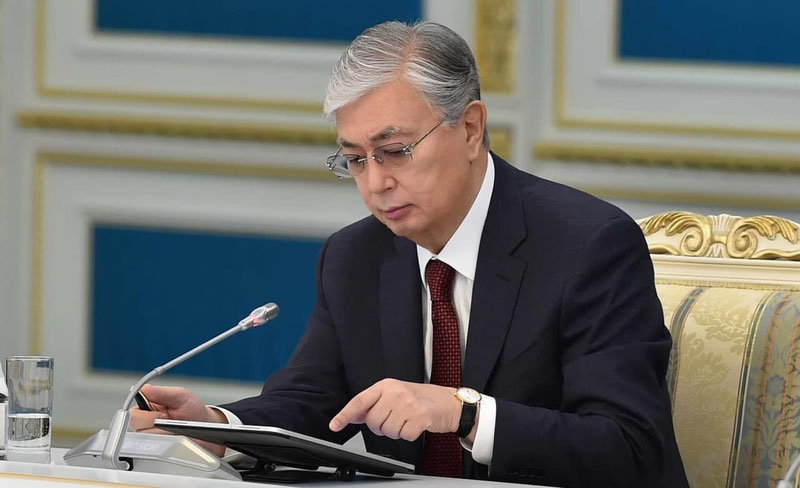
Kazakhstan's President Kassym-Jomart Tokayev explained the reasons for his country's renunciation of nuclear weapons in a speech at the United Nations University in Tokyo on December 19.
According to his emphasis, Kazakhstan's decision is considered an expression of strategic foresight and firm commitment to peace and global human security. Tokayev noted the growing nuclear threats, stating that countries like Kazakhstan and Japan deeply understand the severe consequences of nuclear weapons.
"Hiroshima, Nagasaki, and Semipalatinsk are constant reminders of how costly nuclear responsibility is. Upon gaining independence, Kazakhstan made a historic decision, closing the Semipalatinsk nuclear test site and renouncing the world's fourth-largest nuclear arsenal. This was not a sign of weakness, but a sign of commitment to peace," said the president.
According to Tokayev, despite 30 years having passed, Kazakhstan's position remains unchanged. He called on the international community to intensify efforts towards complete nuclear disarmament and to ensure the entry into force of the Comprehensive Nuclear-Test-Ban Treaty.
Furthermore, the President of Kazakhstan emphasized the necessity of taking decisive measures to restore dialogue between nuclear states and to eliminate the threat of the use and testing of nuclear weapons.
For reference, over 450 nuclear tests were conducted at the Semipalatinsk test site in Kazakhstan between 1949 and 1989. The site was closed on August 29, 1991, and Kazakhstan became one of the first countries to voluntarily renounce nuclear weapons.