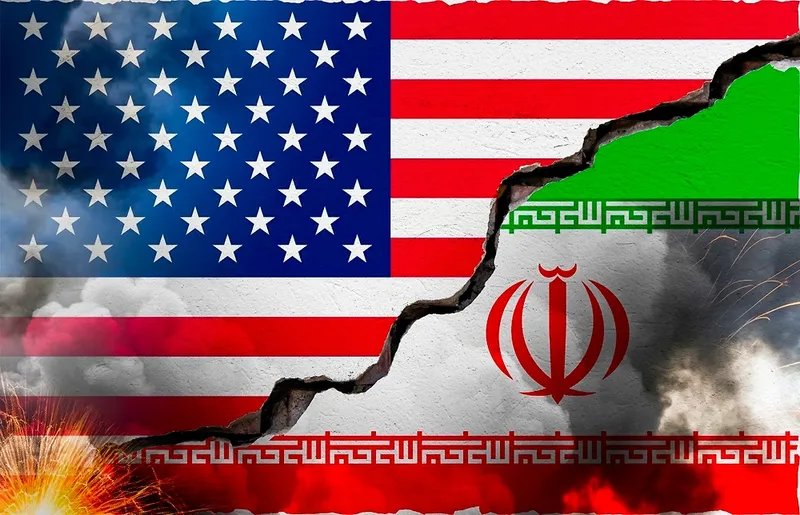
The White House is assessing the ceasefire declared in early April as the end of the war with Iran.
According to AP, the Trump administration in the US has announced that military actions against Iran have concluded before the 60-day statutory deadline expired. Zamon.uz reported this.
It was reported that the White House considers the ceasefire declared in early April as the actual end of the war. This approach may allow the administration to bypass the requirement to obtain formal authorization from Congress.
US Secretary of Defense Pete Hegseth stated in his Senate testimony that the ceasefire had "halted" the war. On this basis, the administration is arguing that the 60-day deadline set under the 1973 War Powers Resolution has not yet been triggered.
According to this resolution, US President Donald Trump must consult with Congress before sending troops abroad and initiating military actions. The use of armed forces without Congressional approval is limited to 60 days, and this document has the status of federal law.
According to a high-ranking source in the administration, military actions that began on February 28 are considered concluded. The source also stated that there have been no exchanges of fire between the US and Iran since the two-week ceasefire that began on April 7.
However, the situation has not fully stabilized. Iran maintains control over the Strait of Hormuz, while the US Navy has imposed a blockade aimed at restricting Iranian oil tankers' access to the sea.
It was reported that the 60-day deadline expired on May 1. According to Reuters, after this deadline expires, the president must choose one of three options: halt military actions, request an additional 30-day extension to withdraw troops, or seek formal authorization from Congress to continue operations.
Democrats are demanding that the administration seek formal authorization for the operation against Iran. Although some Republicans have supported short-term actions, they consider Congressional involvement necessary for prolonged operations, and some have explicitly stated they would not support continuing the war.
Richard Goldberg, who served as director for countering weapons of mass destruction in Iran during Trump's first presidential term on the National Security Council, has recommended that the administration transition to a new operational format. In his view, a new mission, which could be named "Epic Passage," would be a continuation of the previous operation "Epic Fury," focused on self-defense and aimed at restoring freedom of movement in the Strait of Hormuz.
Senator Susan Collins of Maine emphasized that "this deadline is not a recommendation, but an obligation" and supported the initiative to halt military actions without Congressional approval. According to her, subsequent steps must have clear objectives and a strategy.
Experts, however, are questioning the administration's legal interpretation. Specifically, Senator Tim Kaine, who raised this issue in the Senate, assessed this approach as "unprecedented and lacking a legal basis."